Case Study
Personalized career platform for the Wharton School
The Wharton School of the University of Pennsylvania needed to reduce complexity and better support students through the job search process, Lincoln Loop designed and built a flexible, personalized platform.
Background
The Wharton School is one of the world’s leading business schools, with a highly competitive MBA program and a global alumni network. As part of its career services offering, Wharton developed My Action Plan (MAP), a digital platform created to support students throughout their career exploration and post-MBA planning.
MAP helps students explore and prioritize career paths as they build foundational industry knowledge and master essential recruiting skills throughout the job search lifecycle. It connects them with relevant opportunities and events, and provides access to Wharton’s career advisors for in-person support. The platform plays a central role in guiding students through a complex, high-stakes process in which timing, preparation, and access to the right information are critical.
Challenge
MAP had grown into a content-heavy and increasingly difficult system to use and maintain.
Navigation had become a “junk drawer,” with too many competing entry points and unclear paths. Long pages created cognitive overload, making it difficult for students to know what to do next.
The system also struggled to support multiple audiences. The initial design followed a 10-step job-search process, but real users took different paths depending on industry, timing, and experience level. The rigid structure could not accommodate that variability.
Behind the scenes, content was divided across multiple pages, leading to duplication and inconsistency. Editors lacked the tools to manage content efficiently and frequently depended on developers for updates.
At the same time, accessibility gaps and technical limitations made it difficult to evolve the platform.
Wharton needed a system that:
- Simplified navigation and reduced overwhelm
- Supported multiple, non-linear user journeys
- Improved editorial workflows
- Seamlessly integrated multiple systems
- Offered a personalized experience
- Remained flexible and maintainable over time
- Was built on a stable, modern, and Wharton approved tech stack
- Eased data management with automatic and reliable imports
Client


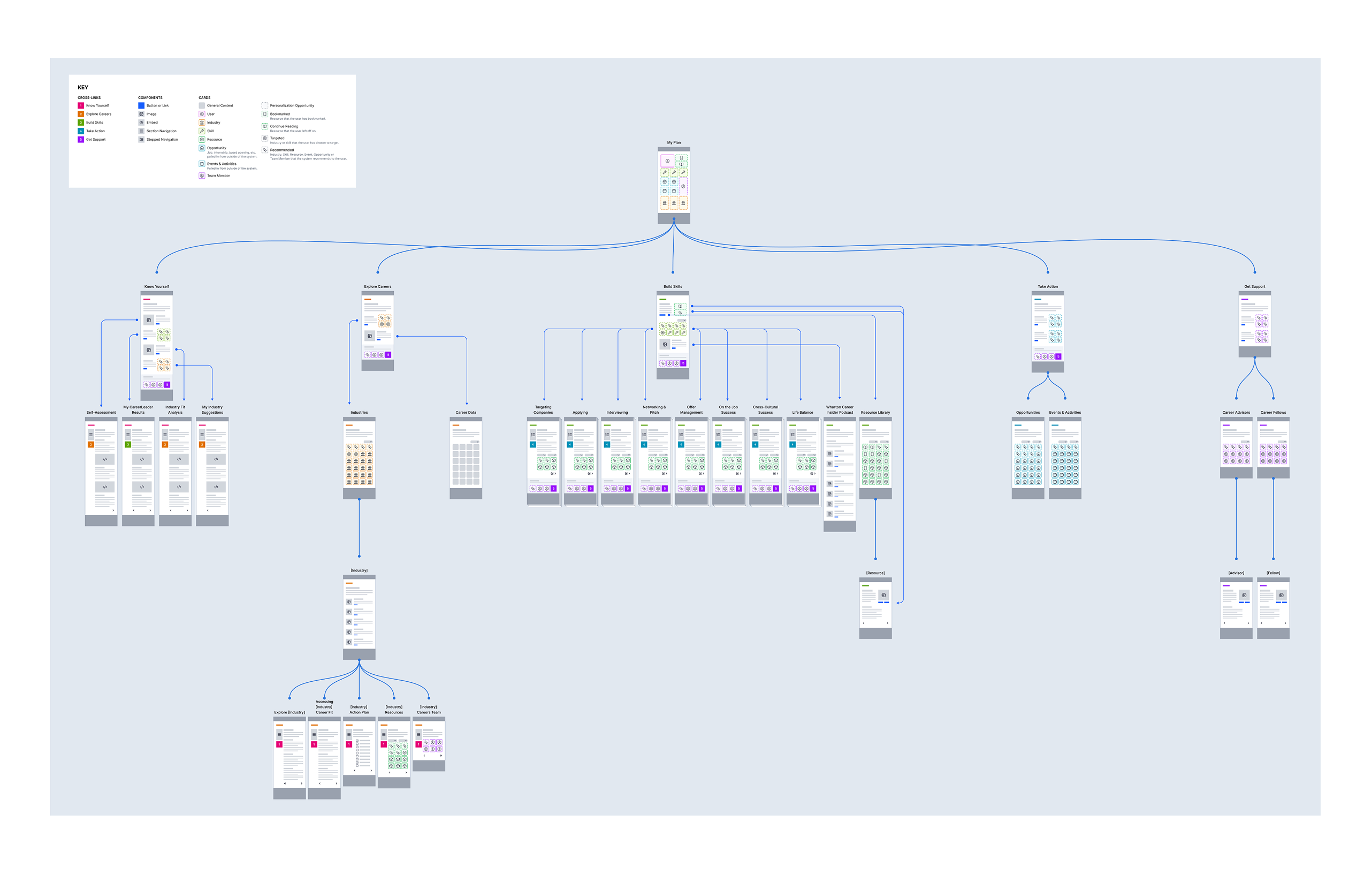
Interaction modeling helped us plan page templates and browse paths to support MAP’s complex information architecture.
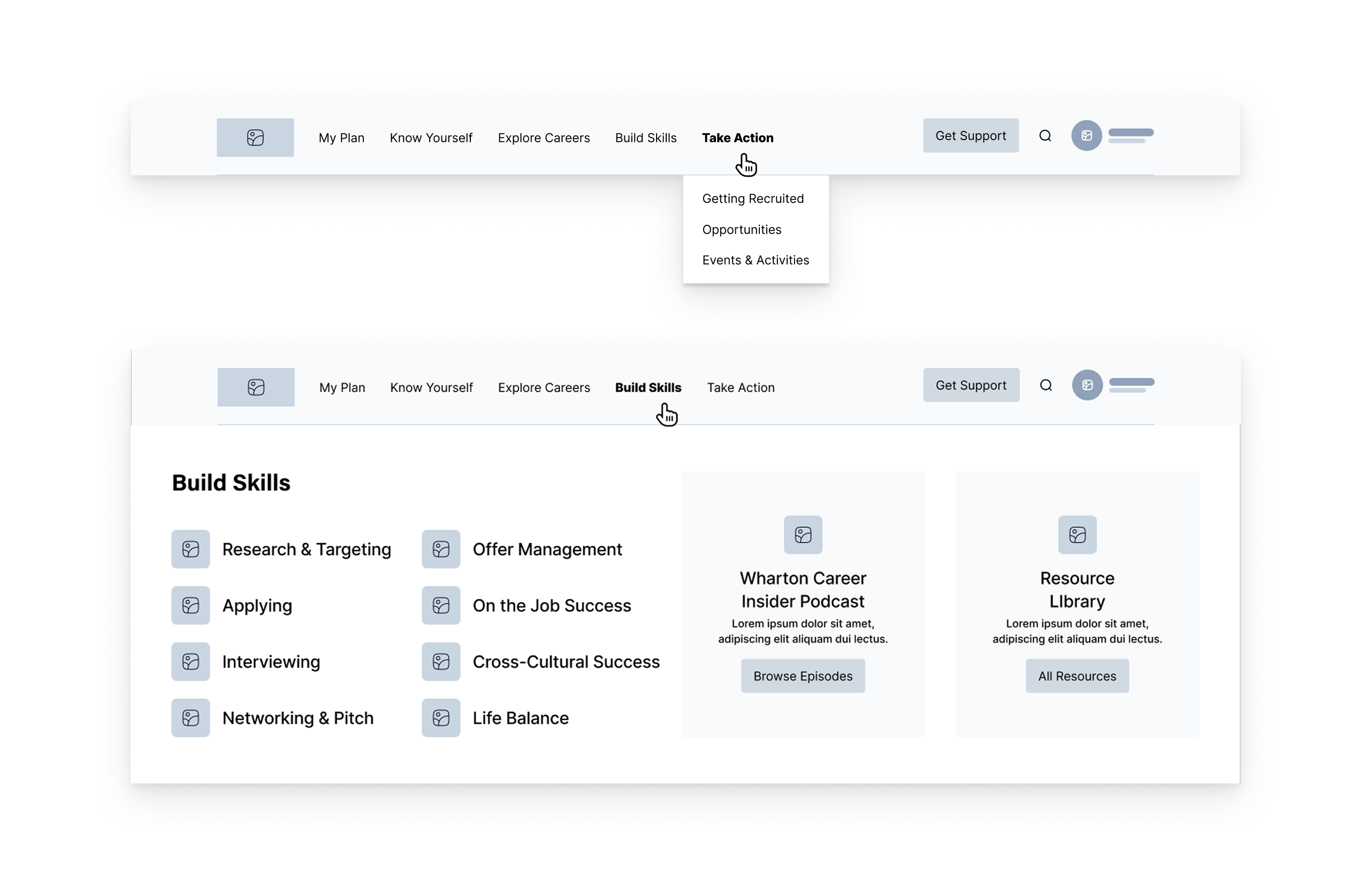
Early low-fidelity navigation mockups revealed the limitations of a traditional navigation model and called for a more flexible approach.
Solution
We approached MAP as both a UX and systems problem, focusing on structure, flexibility, and long-term sustainability. Before writing code, we explored and validated solutions through information architecture mapping, interaction modeling, and low-fidelity navigation concepts to understand how users would move through the platform.
This process revealed the limitations of a single linear navigation model, leading to a more flexible structure that supports multiple paths and adapts to users' goals, timing, and experience.
We built the platform using Wagtail CMS, creating a structured, scalable foundation that could integrate with Wharton’s existing systems and run within their AWS infrastructure. The architecture was designed to support large numbers of concurrent users while remaining maintainable by Wharton’s internal technical team over time.
Personalization is a core feature of the MAP experience. We integrated structured student data from Wharton’s data warehouse to power recommendations, navigation, and content visibility across the platform. This allows MAP to adapt in real time and surface relevant jobs, events, and resources based on each student’s interests, activity, and progress. In doing so, we worked closely with Wharton to help shape the underlying data structures and pipeline, ensuring the system could reliably support personalization at scale.
The CMS editing experience is designed specifically for career advisors and non-technical staff, with intuitive tools and reusable components tailored to their workflows. They can confidently create and manage content without relying on developers, reducing friction and enabling faster updates. Structured content models reduce duplication and ensure consistency across the platform.
Throughout the project, design and development worked in parallel, with UX decisions directly shaping the system's build. Regular user testing and stakeholder feedback informed ongoing iteration, helping refine both the user experience and the editorial workflows at each stage.
We provided extensive documentation and ongoing training throughout the project, helping Wharton’s team build confidence in the system and incorporate it into their day-to-day workflows.
MAP is now a flexible, data-driven platform that supports personalized experiences at scale while remaining maintainable, extensible, and owned by Wharton’s team.
The Right Fit for the Job
Lincoln Loop brings deep experience designing and building content-rich platforms for complex organizations. By combining UX strategy, design systems, and engineering, we help clients solve structural challenges that impact both users and content teams.
For MAP, Wharton needed a partner who could rethink information architecture, support multiple user journeys, improve editorial workflows, and build a platform designed to evolve. Our experience with complex content systems and collaborative product development helped us address both the user experience and technical challenges at the heart of the project.
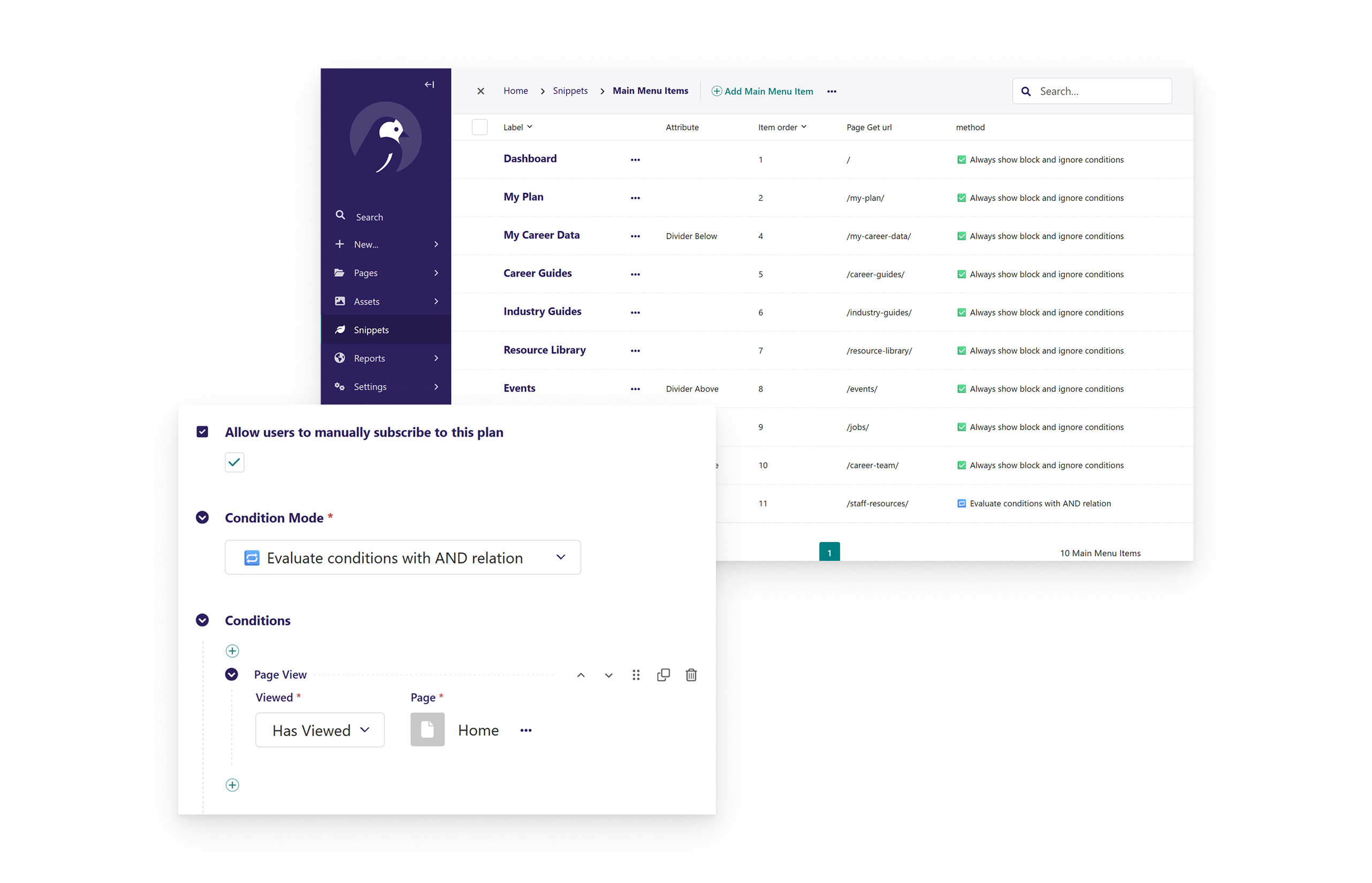
Custom-built conditional logic tools allow content editors to personalize content and navigation, optimizing for multiple audiences.
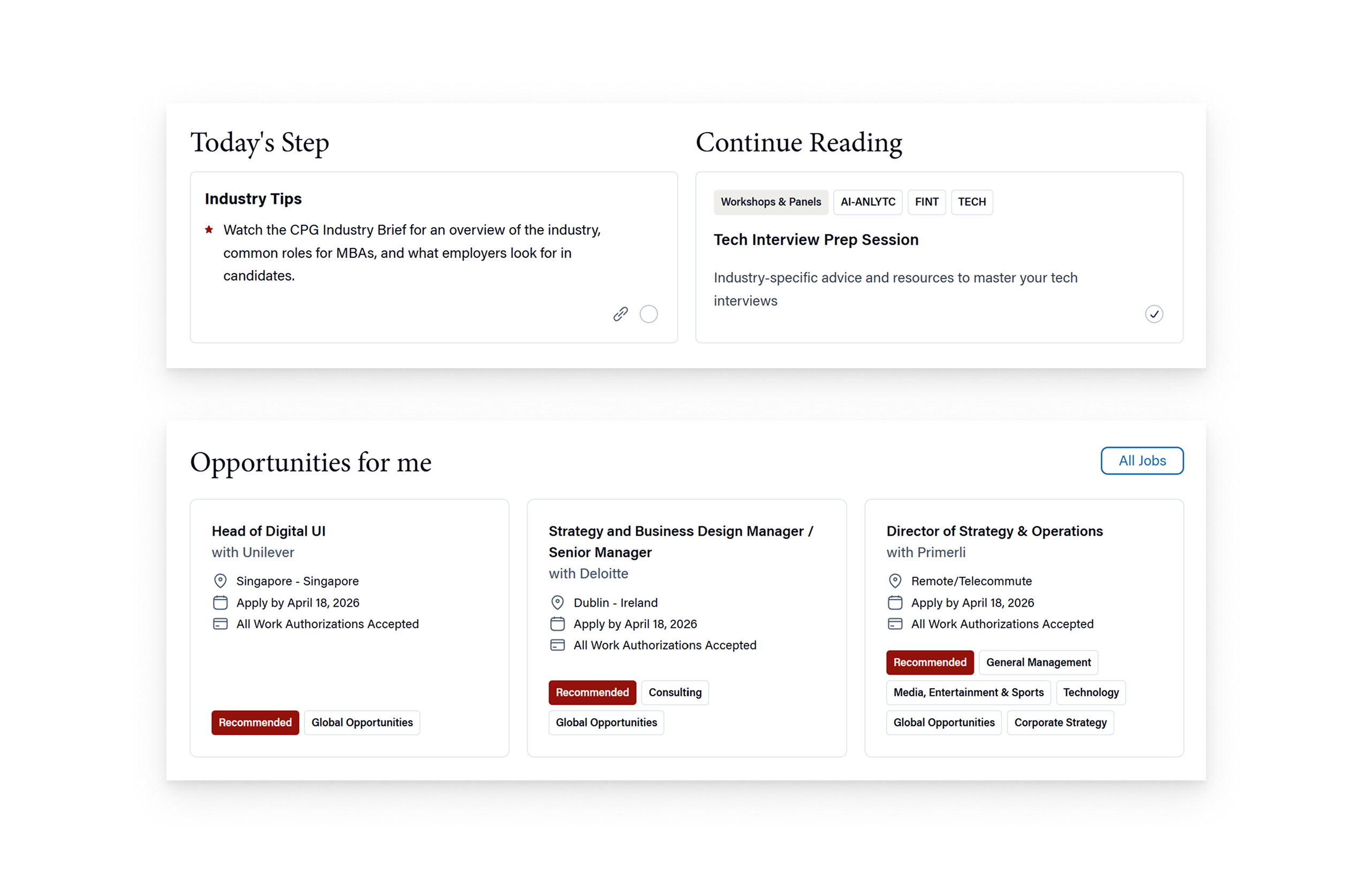
A recommendation engine shows users the right content at the right time based on their user behavior and interests.
Results
The result is a system that’s easier to navigate and manage, and built to evolve. It reduces friction for users while giving staff much better control over content.
Key outcomes include:
- Navigation redesigned around flexible paths instead of a rigid step-based model
- Customized action plans based on career goals and student profile data
- A personalized dashboard that surfaces next steps, relevant content, and progress
- A centralized, filterable resource library replacing fragmented content across 36+ pages
- Custom CMS tools that allow editors to build and manage pages without developer support
- A data-driven system that delivers personalized recommendations for jobs, events, and resources based on user interests, activity, and progress
- Structured content models that reduce duplication and improve consistency
- Accessibility integrated into components and workflows from the start
- A system designed for long-term ownership by Wharton’s internal team


Flexible learning paths
replace a rigid 10-step model to support unlimited audiences
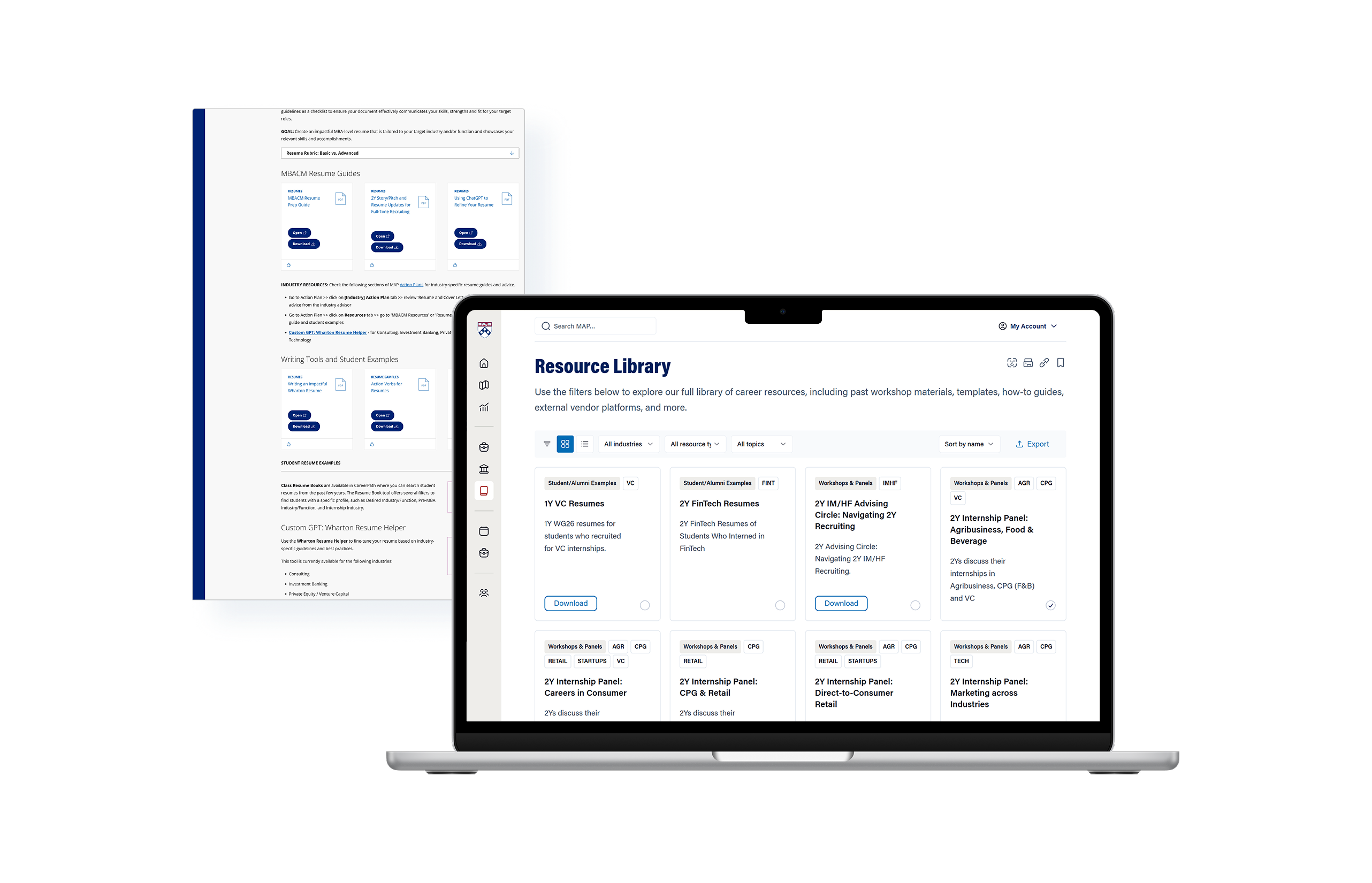
Resources were previously scattered across 36+ content pages, causing content management and discoverability issues. Resources are now consolidated in a filterable resource library, and shown contextually from a single source of truth.
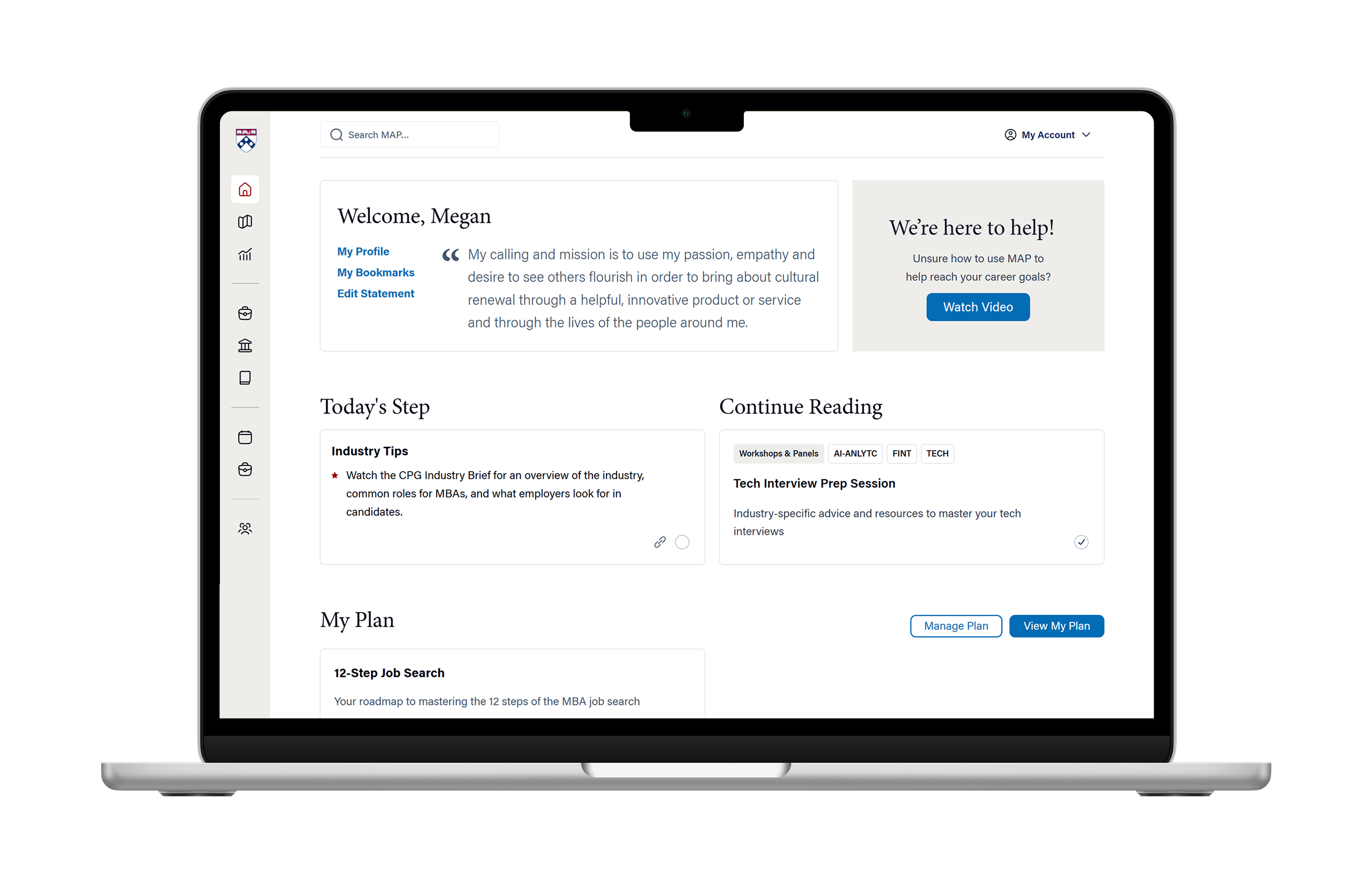
The MAP dashboard, now tailored to each student’s goals and progress.
Looking Forward
MAP’s flexible foundation enables it to evolve into an increasingly intelligent and personalized platform for career exploration and planning.
Future work focuses on:
- Evolving the recommendation system to deliver more precise, context-aware guidance
- Expanding tools that help students actively manage and track their job search
- Enhancing the dashboard with more engaging, actionable features
- Introducing richer visuals to create a more dynamic and motivating experience
- Providing editors with more powerful tools to communicate effectively and respond to student needs
- Extending the platform to support executive MBA and alumni audiences
- These enhancements are driven by ongoing user feedback and close collaboration with Wharton’s team. As the platform evolves, MAP will continue to adapt to changing student needs, strengthening its role as a central, personalized guide throughout the career journey.
The Lincoln Loop team is remarkable. I don't know if we got their A-list people or if everyone at the firm is this good, but we feel very lucky to have Megan and Martin on this project! Given the high level of complexity involved, we are beyond thrilled with the new platform – they truly surpassed our expectations.
Let’s build something great
 Our work has helped over 1 billion people,
delivering solutions that make a difference.
![]() 15+ years of working together,
15+ years of working together,
expertise you can rely on
— no revolving doors.

5 STAR CLIENT REVIEWS
in the fields of friendliness, communication, and knowledge.